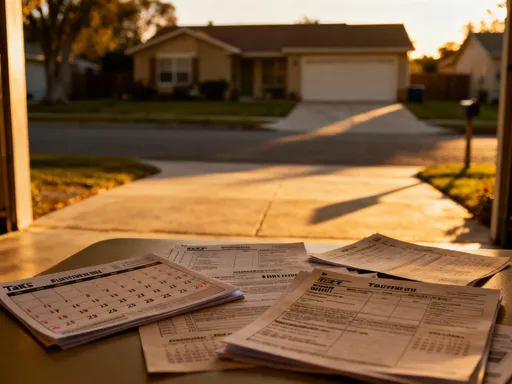
Why Property Taxes Feel So Heavy — A Smarter Way to Navigate the System
You’re not imagining it—property taxes are getting harder to manage. As markets shift and assessments climb, many homeowners feel trapped by rising bills they didn’t see coming. I’ve been there, staring at tax notices that made no sense. This isn’t just about paying more—it’s about understanding the system behind the numbers. Let’s break down how local markets really influence your bill and what you can actually do about it.
Understanding the Link Between Property Taxes and Market Dynamics
Property taxes are deeply intertwined with real estate market conditions, though many homeowners don’t realize how directly their tax burden is shaped by broader economic trends. At its core, property tax is calculated by multiplying your home’s assessed value by the local tax rate. The assessed value, in turn, is typically derived from your property’s market value, which fluctuates based on supply and demand, interest rates, and neighborhood development. When home prices rise across a region due to strong buyer demand or limited inventory, local assessors often respond by increasing property valuations—leading directly to higher tax bills, even if the homeowner hasn’t made any improvements.
This connection means that your financial responsibility as a homeowner extends beyond your mortgage and maintenance costs—it includes staying informed about your local housing market. For example, during periods of rapid appreciation, such as those seen in many suburban areas post-2020, homes that sold for significantly higher prices than just a year prior can trigger reassessments across entire neighborhoods. Even if your home hasn’t changed, its relative value compared to recent sales may increase, prompting a higher assessment. This indirect impact can be surprising, especially for long-term owners who expect stability in their tax obligations.
It’s important to understand that assessments do not always reflect real-time market conditions. Most jurisdictions conduct formal reassessments on a fixed cycle—annually, biennially, or even less frequently. This lag can create a delayed reaction effect: values may be adjusted upward only after a market has already peaked, meaning homeowners face higher taxes just as prices begin to stabilize or decline. Conversely, in a cooling market, assessments may remain high for months or years after actual sale prices have dropped, leading to overpayment. Recognizing this timing mismatch allows homeowners to anticipate changes and take proactive steps rather than reacting after the fact.
Market dynamics also vary significantly by location. A home in a rapidly gentrifying urban neighborhood may experience much steeper valuation increases than one in a rural area with stagnant demand. Local zoning changes, new infrastructure projects, or school district improvements can all influence property values independently of broader economic trends. By tracking neighborhood-specific data—such as average days on market, price per square foot, and the volume of recent sales—homeowners gain a clearer picture of how their area is evolving. This knowledge forms the foundation for informed tax planning and potential appeal strategies.
How Local Governments Use Market Data to Set Tax Liability
The process of determining property tax liability begins with data collection. Local assessors are responsible for estimating the fair market value of every property within their jurisdiction, and they rely heavily on objective market indicators to do so. The most common sources include recent sale prices of comparable homes, known as “comps,” as well as broader economic metrics like employment rates, construction activity, and population growth. These inputs help create a standardized approach to valuation, aiming to ensure that all homeowners are assessed fairly relative to their peers.
However, the application of this data is not always uniform. In fast-moving markets, the gap between when a home sells and when that data is incorporated into assessments can lead to inconsistencies. For instance, if a wave of high-priced sales occurs in the first quarter of the year but the assessment cycle doesn’t update until the following year, some properties may be valued using outdated benchmarks. This delay can result in sudden, steep increases when the system finally catches up—often catching homeowners off guard with little time to prepare financially.
Assessment frequency also plays a crucial role in how tax liability evolves. Some counties reassess property values every year, allowing for gradual adjustments that mirror market trends. Others operate on multi-year cycles—five, seven, or even ten years—meaning that when reassessments do occur, they can reflect several years of accumulated market changes at once. A homeowner in a jurisdiction with infrequent reassessments might enjoy stable taxes for years, only to face a dramatic increase when the next cycle begins. This phenomenon is particularly common in regions with historically low turnover or limited public access to assessment records.
Another challenge lies in how comparables are selected. Assessors typically group homes into categories based on location, size, age, and condition. But in diverse neighborhoods with mixed housing types, the choice of which homes to use as benchmarks can significantly affect outcomes. For example, using the sale price of a newly renovated luxury townhouse to assess a modest single-family home on the same block may inflate the latter’s valuation unfairly. Without transparency in how comps are chosen, homeowners may struggle to understand why their assessment changed. Gaining familiarity with your local assessor’s methodology—often available through public records or municipal websites—can demystify the process and reveal potential discrepancies.
Spotting Red Flags in Your Tax Assessment Notice
Your property tax assessment notice is more than just a bill—it’s a detailed record of how your home has been valued. Reading it carefully can uncover errors that lead to overpayment. Common red flags include incorrect square footage, misrecorded room counts, outdated condition ratings, or even the inclusion of improvements you never made. These inaccuracies may seem minor, but they can significantly inflate your assessed value, especially in high-tax areas where every square foot counts.
One of the most telling signs of an error is a sharp increase in assessed value without a corresponding change in your property or the immediate market. If your home’s valuation jumps 15% or more in a single year while nearby homes have sold at stable or declining prices, that discrepancy warrants investigation. Similarly, if your assessment rises faster than the average for your neighborhood, it may indicate that your property was compared to inappropriate comps—such as larger, newer, or more luxurious homes that don’t reflect typical market conditions for your block.
Another red flag is inconsistency in property classification. Some jurisdictions offer lower tax rates for primary residences versus investment properties or second homes. If your home is incorrectly classified as non-primary, you could be paying more than necessary. Likewise, failing to claim available exemptions—such as homestead, senior, or veteran discounts—can result in avoidable overpayment. These exemptions vary by location but are often automatically applied if eligibility is confirmed; however, some require annual renewal or documentation.
Homeowners should also watch for outdated or erroneous land use designations. For example, if your lot was previously zoned for commercial development but has always been residential, an incorrect classification could lead to a higher valuation. Similarly, if your property includes features like a detached garage, pool, or addition that were never permitted, the assessor might not have accurate records—and in some cases, might assume upgrades exist when they don’t. Requesting a copy of your property’s record card from the assessor’s office allows you to verify every detail and correct inaccuracies before they affect your tax bill.
When and How to Challenge Your Property Tax Bill
Challenging a property tax assessment is a legal right available to most homeowners, and it can lead to meaningful savings. The process typically begins with a review of your assessment notice and supporting data. If you believe your home has been overvalued, the first step is to gather evidence—most importantly, recent sale prices of similar homes in your area. These comparables should match your property in size, age, condition, and location as closely as possible. Publicly available real estate databases, county recorder offices, and local realtor associations often provide this information at little or no cost.
Once you’ve compiled your evidence, the next step is to file a formal appeal with your local board of review or assessment appeals office. Most jurisdictions have strict deadlines—usually 30 to 60 days after the assessment notice is mailed—so timing is critical. Missing the window can mean waiting another full cycle before you can challenge the valuation again. The appeal process often starts with an informal review, where you submit documentation and may speak with an assessor. If the issue isn’t resolved, you can request a formal hearing before an independent panel.
Success in an appeal depends on the strength and clarity of your argument. Simply stating that your taxes are too high is unlikely to result in a reduction. Instead, focus on demonstrating that your assessed value exceeds the fair market value of your home. For example, if three comparable homes sold for an average of $450,000 and your home is assessed at $520,000 despite being similar or inferior in condition, that gap supports your case. Include photos, inspection reports, or records of structural issues if applicable—anything that shows your property is not equivalent to the comps used in your assessment.
It’s also worth noting that appeals are more likely to succeed during market downturns or periods of stagnation, when recent sales data clearly contradicts rising assessments. In strong markets, reductions are harder to achieve, but not impossible—especially if errors in data or methodology are evident. Homeowners who prepare early, organize their materials logically, and present their case calmly and professionally tend to have better outcomes. While some choose to hire professional tax appeal services, many win reductions on their own by following a clear, evidence-based approach.
Using Market Cycles to Anticipate Future Tax Changes
Real estate markets follow predictable cycles—expansion, peak, contraction, and trough—each of which has implications for property taxation. By understanding where your local market stands within this cycle, you can anticipate tax trends and plan accordingly. During expansion phases, when demand outpaces supply and prices rise steadily, assessments are likely to increase in the coming years. This doesn’t mean you should expect an immediate jump, but it does signal the need for vigilance. Monitoring monthly housing reports, tracking average sale prices, and noting inventory levels can help you spot early signs of acceleration.
At the peak of a market cycle, homes often sell above asking price, bidding wars are common, and inventory remains low. While this may feel like a personal financial win for homeowners, it also sets the stage for higher tax bills. Assessors use these high sale prices as benchmarks, and even if your home isn’t on the market, its valuation may rise based on the performance of comparable properties. Being aware of this lag allows you to prepare financially—perhaps by adjusting your household budget or setting aside funds for future tax increases.
When the market begins to cool—marked by longer days on market, price reductions, and fewer multiple-offer scenarios—the opportunity to challenge an inflated assessment grows. If your area experiences a correction but your assessment remains high, you have a strong basis for appeal. Similarly, during a market trough, when sales are slow and prices dip, reassessments may eventually reflect lower values. Staying informed through local housing market reports, municipal publications, and real estate news helps you time your actions effectively.
Technology has made it easier than ever to track these trends. Many counties now offer online portals where you can view assessment histories, sale records, and neighborhood summaries. Third-party tools like real estate analytics platforms or public data dashboards provide additional insights. By integrating this information into your financial planning, you transform property tax management from a reactive chore into a strategic component of homeownership. Awareness becomes a tool—not just for saving money, but for making confident, informed decisions.
Balancing Risk: The Hidden Costs of Ignoring Tax Trends
Ignoring property tax trends may seem harmless in the short term, but the long-term consequences can be significant. One of the most common pitfalls is the silent accumulation of overpayments. If your assessment is inaccurate and goes unchallenged, you continue paying taxes on a higher value year after year. Over a five- or ten-year period, this can amount to thousands of dollars in unnecessary expenses—money that could have gone toward home improvements, retirement savings, or emergency funds. Unlike other bills, property tax overpayments are rarely refunded automatically, even if an error is later discovered.
Another risk is missed appeal deadlines. Most jurisdictions allow only a narrow window to contest an assessment, and failing to act in time locks in the new valuation for the entire cycle. In areas with multi-year reassessment schedules, this means living with an inflated tax burden for years. Additionally, some local governments adjust tax rates in response to changes in total assessed property values. If widespread over-assessments inflate the tax base, overall rates may decrease—but individual homeowners still pay more due to higher valuations. This creates a false sense of system-wide fairness while masking personal financial strain.
On the other end of the spectrum, overreacting to every tax change can also be costly. Filing appeals without sufficient evidence may lead to denial and, in some cases, trigger a more thorough review of your property record. While rare, aggressive scrutiny could uncover issues like unpermitted additions or discrepancies in ownership documentation, potentially leading to penalties or back taxes. The goal is not to challenge every increase, but to respond thoughtfully and strategically based on data and timing.
There is also a psychological cost to financial uncertainty. Receiving a tax bill that feels unjust or unexplained can create stress, especially for fixed-income households or retirees on a tight budget. This emotional burden underscores the importance of transparency and control. By staying informed, homeowners reclaim a sense of agency over one of their largest ongoing expenses. Knowledge reduces anxiety and empowers smarter decision-making.
Building a Smarter Approach: Knowledge, Timing, and Action
Managing property taxes effectively is not about avoiding payment—it’s about ensuring fairness and control. The most successful homeowners treat tax management as an ongoing financial practice, not an annual obligation. This begins with education: understanding how assessments work, what data drives them, and when changes are likely to occur. It continues with consistent monitoring—reviewing notices promptly, comparing assessments to market trends, and verifying property details for accuracy.
Timing is equally important. Knowing your local assessment cycle, appeal deadlines, and market conditions allows you to act at the right moment. Procrastination can cost you money; preparation can save it. For example, if you know a reassessment is scheduled for next year, you can begin collecting comparables and documenting any factors that might justify a lower valuation—such as nearby properties with prolonged listing times or recent price reductions.
Action completes the cycle. Whether it’s filing an appeal, applying for an exemption, or simply adjusting your household budget, taking deliberate steps turns confusion into clarity. Many homeowners who adopt this systematic approach report not only lower tax bills but greater confidence in their financial decisions. They no longer feel at the mercy of unpredictable increases; instead, they see themselves as informed participants in the system.
In the end, property taxes are one of the most significant financial responsibilities of homeownership. But they don’t have to be a source of frustration. With knowledge as your foundation, timing as your strategy, and action as your tool, you can navigate the system with confidence. Being informed doesn’t just protect your wallet—it strengthens your sense of control, stability, and long-term security in your home.